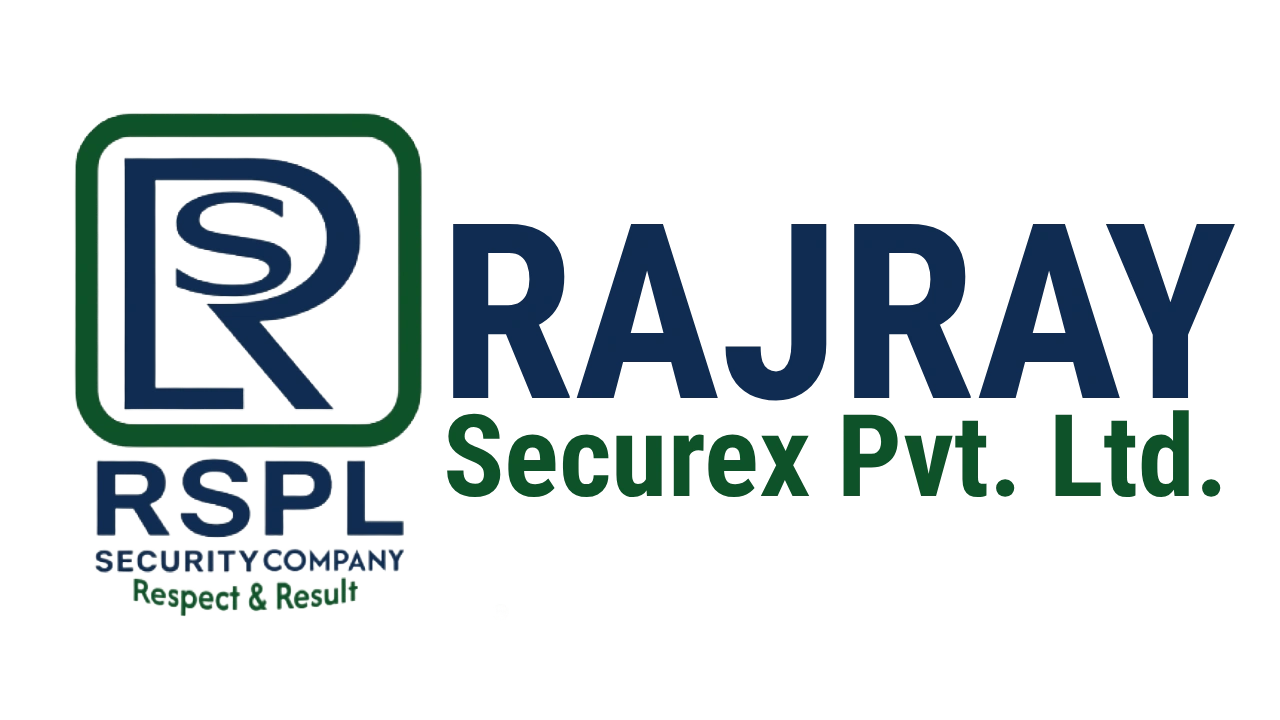
Every Residential Welfare Association eventually faces the same question: is our current security setup actually protecting the people who live here, or is it just a guard sitting at a gate? As cities grow denser and residential complexes grow larger, security services for housing society premises have moved from a “nice to have” to a non-negotiable part of community management. Yet most RWAs and apartment associations select a Security Company the same way they select a plumber – based on a phone call, a quoted price, and a gut feeling.
This guide is built for RWA committee members, apartment association office-bearers, and property managers who want a structured, practical way to evaluate, select, and onboard a professional security provider. Instead of generic safety tips, it focuses on the actual decision-making process: what to ask, what to verify, how to run a fair selection process, and how to manage the relationship once a vendor is on board.
Why Professional Security Matters for Residential Societies
A housing society is not a single building with one door – it’s a small township with multiple entry points, shared amenities, visiting vendors, delivery staff, domestic help, and hundreds of residents moving in and out at all hours. Without structured residential security services, this complexity becomes a liability rather than a convenience.
Professional apartment security delivers value in several concrete ways:
- Controlled access – every vehicle and visitor entering the premises is logged, verified, and, where needed, denied entry.
- Deterrence – visible, uniformed, trained guards reduce opportunistic theft, unauthorized parking, and trespassing far more effectively than a CCTV camera alone.
- Emergency response – a trained guard knows how to react to a fire alarm, a medical emergency, or a security breach in the first two minutes, before external help arrives.
- Accountability – logbooks, patrol records, and incident reports create a paper trail that protects the RWA legally if something goes wrong.
- Peace of mind for residents, particularly for senior citizens, single working professionals, and families with young children who are home during the day without other adults present.
The difference between a security guard who was simply “arranged” and a security guard for apartment complex deployment planned by a professional agency usually shows up during a crisis – not during a routine day. That’s the gap this guide helps you close.
Step 1: Understand Your Society’s Security Needs Before You Start
Before contacting any vendor, the managing committee should define what “secure” actually means for your specific property. Agencies price and staff their proposals based on your requirements, so a vague brief gets a vague – and often mismatched – quote.
Questions worth answering internally first:
- How many entry/exit points (main gate, service gate, basement ramps, clubhouse entrance) need coverage?
- What is your resident and vehicle footfall during peak hours versus night hours?
- Do you need round-the-clock (3-shift) deployment or day-only coverage?
- Do you already have CCTV, boom barriers, or an access control system that guards will need to operate?
- Do you need dedicated staff for the clubhouse, parking, or fire safety duties, in addition to gate security?
- What is your realistic monthly budget per guard, including supervisory and reliever staff?
Documenting this as a one-page brief – sometimes called a Scope of Work – makes every subsequent conversation with an agency faster and more comparable across vendors.
Step 2: How to Evaluate a Security Company for Your Housing Society

Once you know what you need, shortlist 3–5 agencies and evaluate them against the same criteria. This is where most RWAs go wrong – they compare quotes without comparing capability. Below is a structured framework for evaluating any Security Company for residential society deployment.
1. Licensing and Legal Compliance
In India, any agency deploying security personnel must hold a valid license under the Private Security Agencies (Regulation) Act, 2005 (PSARA) for the state(s) in which it operates. Ask for:
- A copy of the current PSARA license (check the validity date and the licensed districts).
- GST registration and PAN details for contractual and invoicing purposes.
An agency unwilling to share these documents upfront should be dropped from consideration immediately, regardless of price.
2. Experience with Residential Complexes Specifically
Corporate, industrial, and event security require different skill sets than residential deployments. Ask how many housing societies or gated communities the agency currently serves, for how long, and request two or three references you can actually call. A long client list on a brochure means little without verifiable, ongoing residential contracts.
3. Recruitment, Verification, and Training Standards
This is the single most important – and most commonly skipped – evaluation area. Ask the agency to walk you through their process end to end:
- How guards are sourced and screened before hiring.
- What training guards receive (access control procedures, fire and emergency response, first aid, conflict de-escalation, and specifically RWA security management protocols like visitor logging and society bylaws).
- Whether guards are trained on the systems your society already uses (visitor management apps, boom barriers, biometric access).
4. Manpower Planning and Backup Strength
A common failure point is what happens when a guard falls sick or resigns. Ask:
- What is the reliever/backup ratio the agency maintains?
- How quickly can they replace a guard on short notice?
- Who supervises the guards on-site, and how often does a field/area officer visit unannounced?
5. Technology and Reporting
Modern security services for housing society deployments increasingly combine manpower with technology. Evaluate whether the agency supports:
- Digital visitor management (photo capture, ID scanning, pre-approval via resident app).
- Integration with existing access control systems, boom barriers, and CCTV.
- Digital attendance and patrol tracking (geo-tagged patrol checkpoints) rather than paper registers alone.
- Regular incident and activity reports shared with the committee.
6. Insurance and Liability Cover
Confirm whether the agency carries liability insurance covering theft, negligence, or injury involving its personnel while on duty. This protects the RWA from being the sole party liable in a dispute.
7. Transparent, Itemized Pricing
A trustworthy quote breaks down the guard’s salary, statutory deductions (PF/ESI), supervisory charges, equipment, and the agency’s service margin – rather than a single lump-sum “per guard per month” figure. This transparency also tells you whether the agency is complying with minimum wage law, which protects the society from future labour disputes.
At-a-Glance Evaluation Checklist

| Criteria | What to Verify |
| PSARA license | Valid, current, covers your state/district |
| Training | Certified training in access control, fire safety, first aid |
| Experience | Active residential society contracts, checkable references |
| Backup strength | Documented reliever ratio and replacement turnaround |
| Technology | Visitor management, patrol tracking, incident reporting |
| Insurance | Liability cover for deployed personnel |
| Pricing | Itemized breakdown, statutory compliance visible |
| Contract terms | Clear SLA, notice period, escalation matrix |
Looking for a Security Partner for Your Society?
Talk to our team about your society’s security requirements, deployment needs, and security management approach.
Step 3: Running a Fair Selection Process (RFP Approach)
Rather than negotiating informally with one or two known contacts, larger societies benefit from a lightweight tender-style process:
- Draft and circulate a Scope of Work (from Step 1) to shortlisted agencies simultaneously.
- Request written proposals covering staffing plan, training approach, technology, pricing breakup, and references.
- Conduct a site visit and interview – invite each agency’s local supervisor or branch manager to walk the property with the committee and point out gaps in the current setup.
- Request a short paid trial deployment (2–4 weeks) before signing a long-term contract, so the agency’s actual field performance – not just their proposal – can be assessed.
- Finalize the contract with a clearly defined Service Level Agreement (SLA), notice period, escalation matrix, and review schedule.
This process takes a few extra weeks but significantly reduces the chance of a mismatched, hastily-signed contract that the society regrets within months.
Step 5: Onboarding the Security Company – A Practical Framework
Selecting the right agency is only half the job; how the RWA onboards them determines whether the partnership actually works day to day.
Contract and documentation – Formalize the SLA in writing, covering guard count and shift timings, replacement turnaround for absentees, reporting frequency, penalty clauses for lapses, and the notice period for termination by either party.
Site induction – Before deployment, walk the incoming guards and their supervisor through the property – entry/exit points, resident amenities, restricted areas, fire exits, and any society-specific rules (visitor timings, vendor entry protocols, parking policy).
Standard Operating Procedures (SOPs) – Document, in writing, exactly how gate entry, visitor management, delivery and courier handling, domestic staff verification, and emergency response should work at your specific property. Share this SOP with the agency’s supervisor and post a summarized version at the security desk.
Communication channel – Assign one committee member (or the property manager) as the single point of contact with the agency’s area/field officer, so issues are escalated consistently rather than through multiple residents contacting different guards directly.
Technology handover – If your society uses a resident app, visitor management software, or access control hardware, ensure the agency’s supervisor and guards are formally trained on it before go-live, not figured out on day one.
Initial review window – Schedule a formal check-in at 30 days to review performance against the SLA – attendance, incident logs, resident feedback, and any gaps identified during the trial period – before the contract auto-renews.
Managing the Relationship Long-Term
Onboarding is not a one-time event. Societies that maintain strong security outcomes over years typically:
- Hold a monthly or quarterly review meeting with the agency’s supervisor, going through incident logs and resident complaints.
- Rotate guard postings periodically (within reason) to prevent over-familiarity that can compromise access control discipline.
- Reassess staffing levels annually as the society’s needs change (new towers, new amenities, changing footfall).
- Keep a documented incident register, reviewed jointly with the agency, so patterns (repeated gate lapses, frequent guard turnover) are caught early rather than after an actual security failure.
Common Mistakes RWAs Make When Hiring Security
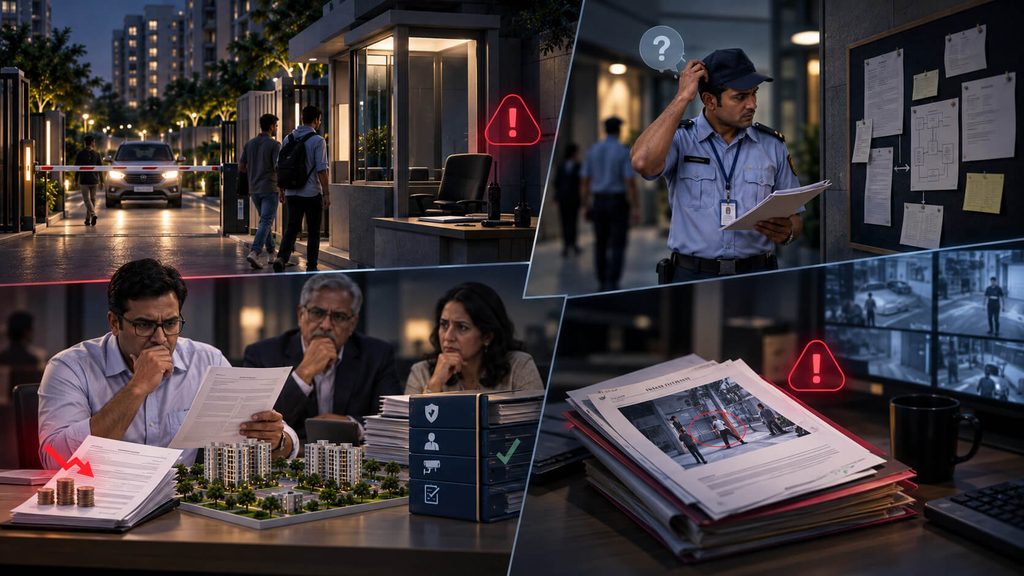
- Choosing solely on lowest price – Without checking whether the quote actually complies with minimum wage and statutory deduction norms – an unrealistically low quote is often a red flag, not a bargain..
- No written SOPs – leaving guards to interpret “society rules” inconsistently, especially during shift changes.
- No backup/reliever clause in the contract, leading to gate vacancies whenever a guard is on leave.
- Treating onboarding as a handover, not a process – signing the contract and assuming the agency will “figure it out” without induction or a defined point of contact.
- No periodic review, so declining service quality goes unnoticed until an actual incident forces a re-evaluation.
Avoiding these mistakes is less about spending more money and more about building a disciplined selection and management process – the framework above is designed to give any committee, regardless of society size, exactly that structure.
Choosing a Partner for Long-Term Security Management
For RWAs that want to skip the trial-and-error of vetting multiple unknown vendors, working with an established, PSARA-licensed provider with a specific track record in housing society security can shorten the evaluation process considerably. Rajray Securex Pvt. Ltd. is one such professional Security Company, offering trained security personnel, structured guard deployment, and customized security solutions built around the specific access control, visitor management, and patrolling needs of gated communities and apartment complexes.
Whether your society is evaluating a first-time security setup or looking to replace an underperforming vendor, working with a provider that already understands RWA security management – documentation, statutory compliance, guard training, and reporting – can meaningfully reduce the onboarding effort described in this guide. You can review their approach to residential security services directly at Rajray Securex Pvt. Ltd..
Ready to Strengthen Your Society’s Security?
Get in touch with Rajray Securex Pvt. Ltd. to discuss trained security personnel, deployment requirements, visitor management, and ongoing security needs for your residential community.
Conclusion
Selecting a Security Company for a residential society is not a one-time procurement decision – it’s an ongoing operational partnership that directly affects resident safety, property value, and the committee’s own liability. A structured evaluation process – checking licensing, verifying guards individually, testing performance through a trial period, and formalizing SOPs before go-live – turns security guard for apartment complex deployment from a routine expense into a genuine safety investment.
RWAs that treat vendor selection and onboarding with the same rigor as any other major society decision consistently end up with fewer incidents, fewer disputes, and a security team that residents actually trust. Whether you manage the process entirely in-house or partner with an experienced provider like Rajray Securex Pvt. Ltd., the goal remains the same: a gated community that is secure by design, not by accident.