A half-built site with weak construction site security is one of the easiest targets a thief will ever find. Expensive machinery sits out in the open overnight, steel and copper are stacked in plain sight, and fencing is often the only thing standing between a project and a costly loss. For contractors and developers, construction site theft isn’t a rare inconvenience – it’s a recurring line item that eats into margins, delays handovers, and drives up insurance premiums.
The good news is that most site thefts are preventable. With the right mix of trained personnel, technology, and process, you can turn a vulnerable site into one thieves actively avoid. This guide breaks down why sites get targeted, what typically goes missing, and the practical steps that strengthen construction site security from day one.
Why Construction Sites Are Prime Targets for Theft
Construction sites offer thieves nearly everything they look for: high resale-value assets, minimal supervision after hours, and often no formal way to prove ownership once equipment leaves the gate. Unlike a warehouse or office, sites are open-air, spread across acres, and change layout every few weeks as work progresses – making consistent construction site safety harder to maintain without a dedicated plan.
A few factors make matters worse:
- Equipment and materials are frequently left outdoors overnight or over weekends.
- Multiple contractors and vendors move in and out, making it hard to track who should be on-site.
- Heavy machinery rarely has a title or license plate, so stolen units are easy to resell.
- Rural or under-lit sites see little passive surveillance from the public.
The Real Cost of Construction Site Theft
India doesn’t maintain a single national ledger of construction site theft the way some other countries track equipment crime, so the true scale is hard to pin down in one number. But police records and news reports from across the country show the pattern clearly: this is a routine, recurring loss for builders, not an occasional accident.
- In Udupi, Karnataka, a site engineer was booked after aluminium and other materials worth ₹3.84 lakh went missing from a hospital construction site over a matter of weeks.
- In Bengaluru’s Yelahanka area, a gang of around 15 men overpowered security guards and made off with three tonnes of iron rods in a single night.
- On the Delhi-Amritsar-Katra Expressway project, police busted a theft ring – allegedly run in part by a contractor on the job – that had been siphoning off sand, gravel, and steel rebar from the site itself.
Cases like these, reported regularly from Uttar Pradesh, Karnataka, Punjab, and elsewhere, point to the same weak spots: unsecured yards, unverified staff, and a resale market that makes steel, cement, aluminium, and copper easy to offload.
Beyond the value of what’s taken, contractors absorb costs that are often larger than the stolen item itself: rental charges for replacement equipment, delays while materials are reordered, idle labor on site, and disputes with clients or vendors over accountability. Repeated incidents also make it harder and more expensive to insure a project. For builders working on tight margins, theft-related losses can quietly add several percentage points to a project’s total cost – money that a modest investment in site security would have saved several times over.
Common Types of Construction Site Theft
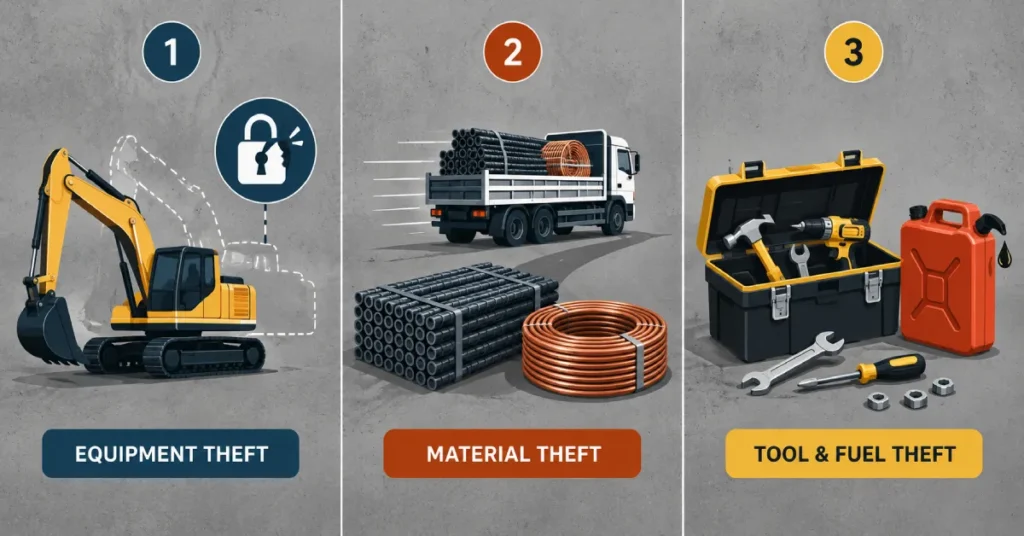
Equipment and Machinery Theft
Excavators, loaders, generators, and skid steers are frequent targets because they’re valuable, mobile, and easy to move without keys. Organized theft rings often study a site for days before striking, timing the theft for a weekend or holiday when the crew is away.
Material Theft
Copper wire, steel rebar, aluminum fittings, and plumbing fixtures are stolen in bulk and sold quickly through scrap dealers. Because materials are usually stacked in open yards, they require no special skill to lift – just a vehicle and an unguarded gate.
Tool and Fuel Theft
Power tools, hand tools, and diesel fuel are smaller-ticket items but disappear far more often, since they’re easy to conceal and carry. Repeated small losses add up to significant costs over the life of a project.
How to Protect Materials and Equipment on a Construction Site

Strengthen Physical Site Security
Start with the basics: perimeter fencing, locked gates, motion-sensor lighting, and secure storage containers for tools and small materials. Store high-value equipment inside a fenced compound rather than at the edge of the site, and rotate the use of wheel locks, fuel cut-off switches, and GPS trackers on machinery that stays overnight.
Deploy Trained Security Guard Services
Technology alone can’t stop every intrusion – a visible, trained presence remains one of the strongest deterrents on any site. Professional security guard services provide round-the-clock patrolling, gate control, and rapid response if an intrusion is detected, which is particularly valuable during off-hours when most thefts occur. Guards also help enforce contractor sign-in procedures, so unauthorized vehicles and personnel are flagged before they reach valuable stock.
Install CCTV Surveillance and Remote Monitoring
CCTV surveillance combined with remote monitoring gives site managers visibility even when no one is physically present. Cameras positioned at entry points, material yards, and equipment parking areas act as both a deterrent and a source of evidence if theft does occur. Pairing cameras with security monitoring services means alerts are reviewed in real time, not discovered the next morning after damage is already done.
Track and Mark Equipment
Engrave or paint identification numbers on machinery, photograph serial numbers, and register high-value assets with a national equipment database where available. Marked equipment is harder to resell and easier for law enforcement to trace if it’s recovered.
Improve Site Layout and Access Control
Design the site so valuable materials and machinery sit farthest from public roads and closest to the guarded entrance. Limit the number of active gates, and require ID checks for every vendor delivery or pickup.
Build a Culture of Construction Site Safety
Theft prevention works best when it’s part of everyday site discipline, not a one-off measure. Regular toolbox talks on securing tools at shift end, a clear reporting process for missing items, and accountability for site supervisors all reinforce a stronger construction site safety culture over time.
Choosing the Right Security Partner for Your Construction Site
Not every project needs the same level of coverage – a residential build and a multi-acre infrastructure project have very different risk profiles. When evaluating a partner, look for verified licensing, trained and background-checked guards, a proven combination of manpower and technology, and a track record with similar projects. A partner who can combine security guard services and CCTV monitoring support gives you one point of contact instead of juggling multiple vendors.
Conclusion
Construction site theft is rarely random – it targets sites where supervision is weakest and security is an afterthought. By combining stronger physical barriers, trained security guard services, CCTV surveillance, and simple process discipline, contractors can significantly cut their exposure to loss. If you’re planning security for an upcoming project, a quick consultation can help you match the right level of coverage to your site’s risk profile.
Frequently Asked Questions
What is most commonly stolen from construction sites?
Copper wiring, steel, lumber, hand and power tools, fuel, and heavy machinery such as excavators and generators are the most frequently stolen items.
How can I protect construction equipment overnight?
Store machinery inside a fenced, well-lit compound, use wheel locks and GPS trackers, and station security guards on-site during non-working hours.
Is CCTV enough to prevent construction site theft?
Cameras deter opportunistic theft and provide evidence, but they work best alongside trained security guards who can respond immediately to an alert.
How much does construction theft typically cost a project?
Beyond the replacement cost of stolen items, delays, rental fees, and insurance premium increases can add several percentage points to overall project costs.